5 Signs Your Cat's 
"Normal" Hairballs Are 
Actually Something 
Serious 🚩

5 Signs Your Cat's "Normal" Hairballs Are Actually Something Serious 🚩

And The Daily Habit Most Indoor Cat Owners Have Never Heard Of

4.9/5 BY 70,000+ CAT OWNERS

FAST US

 SHIPPING

FAST US SHIPPING

90-DAY GUARANTEE

SIGN 1

The Hairball Schedule

You know how everyone says "cats just get hairballs"? Here's the part nobody mentions: occasional is normal. Predictable is not.

A hairball every few months — fine. A hairball every week, so regular you know which rug to check? That means swallowed hair isn't moving through your cat the way it's supposed to. It's collecting in the stomach, tangling into mats, and coming back up because it has nowhere else to go.

The hairball on your carpet isn't the problem. It's the overflow.

SIGN 2

Gagging And Retching With Nothing Coming Up

The heaving sound. The hunched posture. And then... nothing.

Owners file this under "trying to get a hairball out." But dry retching usually means hair is sitting in the stomach, irritating it, without enough fiber behind it to push it through in either direction. Your cat isn't failing to produce a hairball. Their digestion is stuck mid-job.

SIGN 3

They Groom Constantly — And All Of That Hair Goes Somewhere

Watch your cat for an evening and count the grooming sessions. Every single one sends hair down the throat — up to a third of the hair they shed ends up swallowed.

A cat grooms 30–50% of their waking hours. That hair arrives in the gut every day. If nothing helps it keep moving every day, it doesn't leave every day. It accumulates.

SIGN 4

Litter Box Changes You've Been Ignoring

This is the sign that separates "annoying" from "serious." Hair that doesn't come up has to go down — and when there's too much of it moving too slowly, you'll see it in the box first: straining, smaller or harder stools, sometimes hair visibly threaded through them.

Most owners never connect the litter box to the hairballs. It's the same hair, at the other end of the same traffic jam.

SIGN 5

Eating Less And Hiding More

A stomach with a slow-moving mat of hair in it feels full and uncomfortable. So the cat eats a little, walks away, sleeps more, plays less.

Cats are wired to hide discomfort — in the wild, looking weak makes you a target. By the time your cat visibly slows down, the buildup has usually been in progress for weeks. This sign looks gentle. That's exactly why it gets missed longest.

REAL CAT GRASS

4 INGREDIENTS

NO FILLERS

SUPPORTS DIGESTION

FEWER HAIRBALLS

CLEANS TEETH

VET FORMULATED

90‑DAY GUARANTEE

THE 10-SECOND DAILY FIX

give them back the habit
indoor life took away

SHOP NOW 

30-Day Money-Back Guarantee

Fast US Shipping

Here's What Connects All 5 Signs

Outdoor cats barely have this problem — and it's not luck.
Outdoor cats chew grass almost every day. Grass fiber is nature's transport system for swallowed hair: it binds it and carries it through the digestive tract, so it exits the normal way instead of building up and coming back up.
Indoor cats swallow just as much hair — often more, since they groom more from boredom. But they have zero access to the one thing that keeps it moving. No grass, no fiber, no exit. The hair collects until your carpet finds out.

The five signs aren't five problems.
They're one missing habit.

The Indoor Replacement

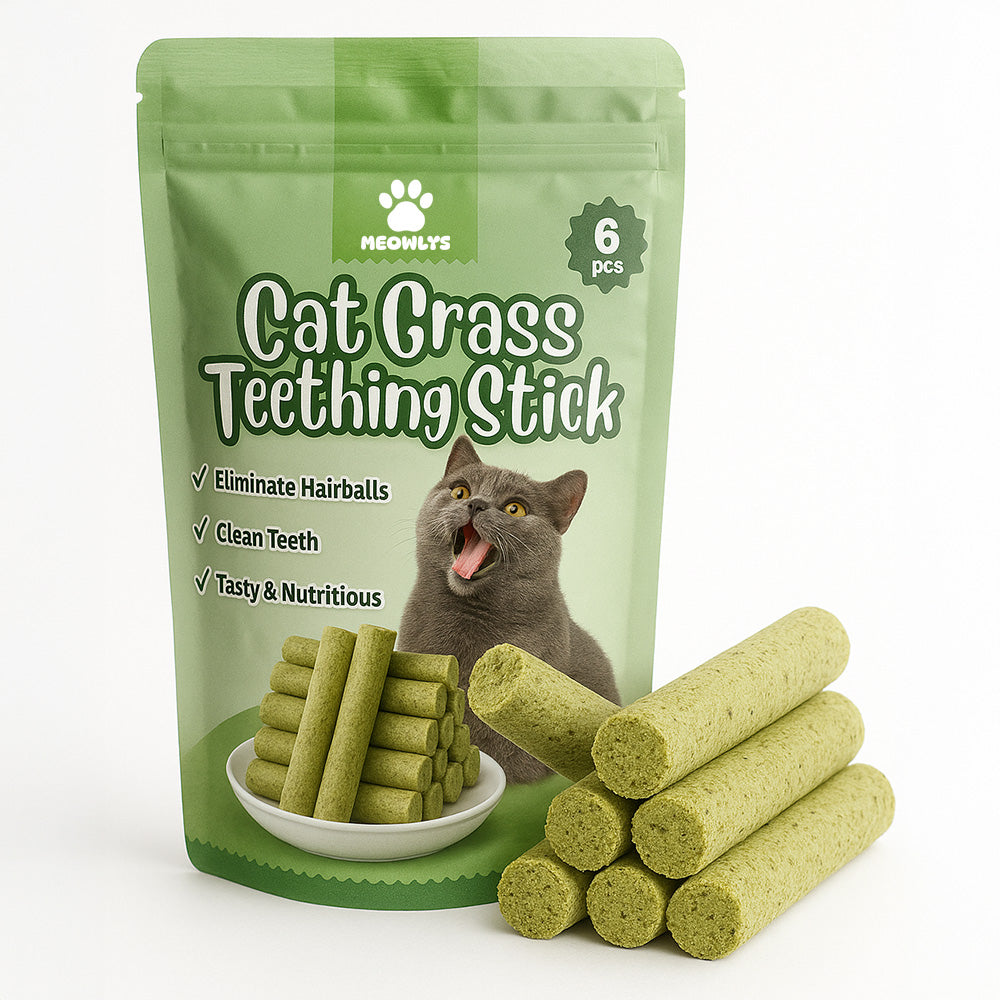
This is why cat grass teething sticks exist. Meowlys Cat Grass Teething Sticks press real cat grass with chicken, egg yolk, and fish oil into a firm, fibrous stick — so an indoor cat can do what nature intended, on the living room floor.

The fiber moves hair through — the way grass does for outdoor cats, so it stops coming back up

Daily chewing keeps the system moving — hair leaves a little at a time, instead of collecting for weeks

The chicken does the convincing — 9 in 10 cats take the stick on the first offer, even picky ones

Cat Grass Teething Sticks (FREE TODAY)

$0.00

$29.99

100% OFF

TRY FOR FREE TODAY

30-Day Guarantee

Fast US Shipping

In a 28-day study, regular cat grass chewing supported healthier digestion — and most owners report far fewer hairballs within the first month.

★★★★★

Rated 4.9/5 by 70,000+ cat owners

"My long-haired cat used to vomit hairballs constantly... Within a few days the vomiting stopped."

Mia K. · Verified Buyer

"My picky cat grabbed the Meowlys stick instantly... the hairballs disappeared completely."

Chloe M. · Verified Buyer

"My senior cat... the vomiting stopped as well, and he seems more comfortable while grooming."

Caroline C. · Verified Buyer

SEE IF IT'S RIGHT FOR YOUR CAT 

Meowlys currently gives new customers their first packs free (just cover shipping) 

— with a 90-day guarantee.

Frequently Asked Questions

My cat only gets hairballs sometimes. Do they still need this?

Occasional is normal. Daily chewing is maintenance — the same way outdoor cats don't wait for symptoms to chew grass.

My cat is extremely picky. Will they eat it?

The sticks are pressed with real chicken — most cats take them on the first offer. If yours doesn't, the 90-day guarantee covers you.

Is it safe for kittens and seniors?

From 3 months old. Supervise chewing as with any treat.

How long until the hairballs stop?

Most owners see them taper within 2–4 weeks of regular chewing. Don't stop early — the built-up hair has to clear first.

This content is for informational purposes and is not veterinary advice. This product is not intended to diagnose, treat, cure, or prevent any disease. Consult your veterinarian regarding your cat's health. Results may vary. © 2026 Meowlys.

SHOP NOW